Social Media for Sportsbooks and Casinos: Reels, Stories and Organic Content That Stays Compliant
6 min read Omnia Agency
Organic social media for a sportsbook or casino means everything you post on your own Facebook, Instagram and other accounts without paying to promote it. Done well, it builds your brand between campaigns, keeps players engaged around big fixtures and gives your paid ads a stronger starting point. Done badly, it breaks advertising rules that apply to your own posts just as much as to your ads.
This guide covers how to set up your accounts, what to post, the rules your posts still have to follow and how to measure what organic social actually brings in.
Do advertising rules apply to organic social posts?
Yes. In the UK, the CAP Code covers marketing on a brand’s own social media accounts, not just paid ads. So a gambling brand’s Reels, Stories and posts must follow the same rules as its advertising. In practice, that means:
- no content with strong appeal to under-18s, such as youth culture or certain sports stars and influencers
- nobody featured who is, or looks, under 25 in a significant role
- no suggestion that gambling can solve money problems or bring social success
- significant terms made clear on any post that promotes an offer
Other markets have their own rules, and some limit bonus promotion completely, such as Ontario and Alberta. If your accounts reach several countries, write to the strictest set of rules your audience falls under.
Setting up your accounts properly
Use business accounts
On Instagram, choose a Business account rather than a Personal or Creator account. Business accounts give you full insights, contact options and the ability to run ads from the same profile. On Facebook, run everything from a Page managed through Meta Business Manager, so access belongs to the company rather than to one person’s login.
Set a minimum age
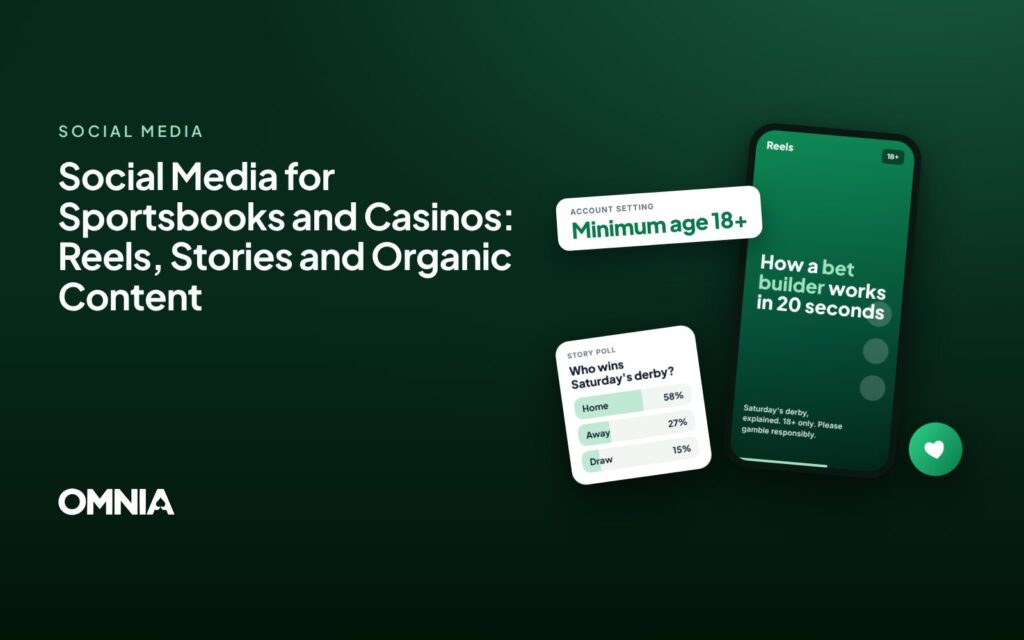
Both Facebook Pages and Instagram professional accounts let you restrict who can see your content by age. Set the minimum to 18, or higher where local law requires it, so younger users cannot follow or view your account.
Make your profile a trust signal
Your bio and Page details are often the first thing a new player checks. Include:
- your licence details and the markets you operate in
- a clear 18+ message and a safer gambling link
- a link to your website, using UTM parameters so you can track visits
Protect the account
Turn on two-factor authentication for everyone with access and remove former staff and agencies promptly. A hijacked gambling account posting non-compliant content is a regulatory problem as well as a brand one.
What to post: formats that work for gambling brands
| Format | Best for | Sportsbook example | Casino example |
|---|---|---|---|
| Reels | Reach and discovery | A 20-second explainer on how a bet builder works | A short look at how a new game’s bonus round works |
| Stories | Daily engagement | A poll on Saturday’s big fixture | Behind the scenes at a live casino studio |
| Carousels | Explainers and data | Five stats before a derby | How RTP and volatility work |
| Live video | Big moments | A live Q&A before the Grand National | A launch of a new game or feature |
| Image posts | Announcements | Fixture graphics and results | New game releases |
Reels for reach
Reels are the main way new people discover your account, so plan them as vertical video first. Grab attention in the first second, add captions because many people watch without sound and keep each Reel to one clear idea.
Stories for engagement
Stories feel more casual than the main feed and disappear after 24 hours, which makes them ideal for polls, quizzes and countdowns around fixtures. Keep them about the sport or the game, not about pushing people to bet.
Carousels for explainers
Carousels work well for educational content, such as how odds work, what each way betting means or how a game feature works. Useful content gets saved and shared, which helps it reach more people.
Live video for big events
Live video suits moments when your audience is already paying attention, such as a big race, a cup final or a launch. Plan who will speak, what they will cover and how you will moderate comments.
Building a posting plan around the fixture list
For a sportsbook, the sporting calendar should drive your content plan. Build each week around the fixtures your players care about:
- Before the event: previews, stats and polls to build interest
- During the event: Stories and short updates, if your team can manage them
- After the event: results, highlights where you have the rights, and the best moments
Casinos can follow a similar rhythm around game launches, seasonal campaigns and big sporting events that their players also follow. Our sportsbook SEO calendar maps the key dates, and the same calendar works for social planning.
How often should you post?
There is no single right number. Start with a schedule you can keep up every week, then compare engagement as you post more or less often. Consistency matters more than volume, and one strong Reel usually beats five rushed posts.
Writing captions and using hashtags
- Put the hook first. Captions are cut off after a line or two, so lead with what matters.
- Use your brand voice. Social works best when it sounds like people, not a press release.
- End with a clear call to action, such as a question, a poll or “link in bio”, rather than a hard sell.
- Use a small set of relevant hashtags for the sport, league or event, rather than a long list.
- Keep safer gambling messages visible on posts that promote your products.
Influencers and user-generated content
Influencer partnerships and user-generated content can make a gambling brand feel more authentic, but they need extra care. In the UK, any influencer who has, or appears to have, strong appeal to under-18s cannot be used, and every paid partnership must be clearly labelled as an ad. Meta also has its own rules for branded content that promotes gambling, so check that your Meta permissions cover it before you start.
If you share content from players or fans, always ask permission first, and never share anything that shows someone who looks under 25 or that suggests gambling is a way to make money.
Measuring what organic social brings in
Followers and likes are easy to count, but they are not the goal. Use Meta’s insights for reach and engagement, and your own analytics for what really matters.
| What to measure | Where to find it | Why it matters |
|---|---|---|
| Reach and plays | Instagram and Facebook insights | Shows how many new people see your content |
| Saves and shares | Instagram insights | A strong sign content is genuinely useful |
| Profile and link clicks | Instagram and Facebook insights | Shows interest beyond the post itself |
| Website sessions from social | Your analytics, using UTM parameters | Connects posts to site visits |
| Registrations and first deposits | Your analytics and back office | The real value of the channel |
Tag every link in your bio and posts with UTM parameters, such as utm_source=instagram and utm_medium=organic_social, so organic visits are not lumped in with paid traffic.
How organic and paid social work together
Organic content is the best testing ground for your ads. Posts that get strong engagement organically often make the best ad creative, and a well-run profile makes people more likely to trust your ads when they see them. For the paid side, see our guide to Meta Ads for iGaming.
Organic social also supports SEO. People who see your brand on social media often search for it later, and useful explainer content can be repurposed into guides on your website.
If you want help with social media for a licensed gambling brand, see our gambling paid social services, including casino paid social and sports betting paid social, or book a free consultation.
FAQs
Can gambling brands post on Instagram and Facebook?
Yes. Licensed gambling brands can run their own accounts and post organically. Their posts must follow the advertising rules of each market they reach, and paid ads also need Meta’s written permission.
Do UK gambling advertising rules apply to social media posts?
Yes. The CAP Code covers marketing on a brand’s own social media accounts, so organic posts must follow the same rules as ads, including those on appeal to under-18s.
Should gambling brands age-restrict their social accounts?
Yes. Facebook Pages and Instagram professional accounts both let you set a minimum age, and setting it to 18 or above helps keep content away from younger users.
What content works best for sportsbooks on social media?
Short vertical video, polls and previews built around the fixture list usually perform best, along with explainers on bet types and odds.
How do you measure the value of organic social media?
Track reach and engagement in Meta’s insights, then use UTM parameters and your own analytics to see how many registrations and first deposits come from social.
Correct as of November 2026. Platform features and advertising rules change often, so check the latest guidance before publishing. For general information only, not legal advice.