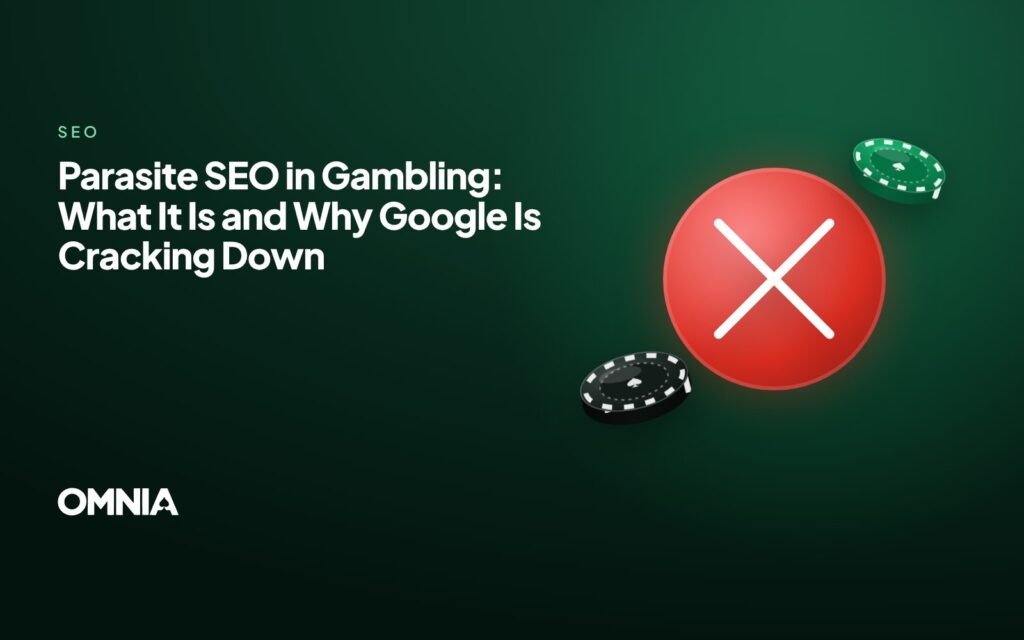
For years, one of the quickest ways to rank for competitive gambling keywords was to publish casino or betting content on someone else’s powerful website. A “best online casinos” page on a well-known news or education site could reach the first page within weeks, borrowing authority the gambling brand had never earned. This tactic became known as parasite SEO.
Google has since made it clear that it treats this as spam. This guide explains what parasite SEO is, what Google’s site reputation abuse policy says, and what gambling brands should do instead.
What is parasite SEO?
Parasite SEO means publishing content on a third-party website with strong authority, so it ranks on the strength of that site rather than its own. In gambling, it usually looks like casino reviews, bonus pages or betting tips sitting in a section of a news site, magazine, university site or other trusted domain that has nothing to do with gambling.
The host site gets paid, and the gambling brand or affiliate gets rankings it could not achieve on its own domain.
What Google’s site reputation abuse policy says
In 2024, Google added site reputation abuse to its spam policies. In simple terms, the policy covers third-party pages published on a site mainly to take advantage of that site’s ranking signals. Google’s own examples have included casino content hosted on unrelated websites.
Google later clarified that the policy applies even when the host site is involved in producing the content. What matters is whether the content is there to exploit the host site’s reputation, not who wrote it.
Sites that break the policy can receive a manual action, which can remove the offending section from search results.
Why it is a risky strategy for gambling brands
- Rankings can vanish overnight. If Google takes action against the host site, all the content on it can disappear from search at once.
- You build nothing you own. Every month spent ranking on someone else’s domain is a month not spent building authority on your own.
- Brand risk. Being associated with tactics Google calls spam is not a good look for a regulated business.
- Compliance risk. You have less control over how your brand and offers are presented on someone else’s site.
What to do instead
The alternative is slower, but it builds something that lasts and that you control:
- Build authority on your own domain. Earn links from relevant websites with real audiences. Our guide to what makes a good gambling backlink explains what to look for.
- Use digital PR. Coverage earned on news sites through genuinely newsworthy stories is very different from paying for a hosted casino section. Learn more about our iGaming digital PR.
- Create the best page on your own site. Focus on content that genuinely helps players, backed by real expertise and trust signals.
- Win the less competitive keywords first. Build momentum with searches you can realistically rank for, then move up to the head terms.
Is guest posting the same thing?
No. A guest post is an article on a relevant website, usually with one or two links back to your site, written to inform that site’s readers. It helps your own domain build authority. Parasite SEO is about the hosted page itself ranking. The line is crossed when a site hosts whole sections of commercial gambling content that have nothing to do with what the site is about.
Build rankings that last
We help casinos, sportsbooks and affiliates build authority on their own domains, with link building and digital PR that stays on the right side of Google’s guidelines. Find out more about our iGaming SEO services, or book a free consultation.