Gambling brands often run separate versions of their site for different countries, because licensing, offers, games and advertising rules vary from market to market. That makes it essential that Google shows each player the right version. When it gets this wrong, players in one country land on a page built for another, and your country versions can end up competing with each other.
Hreflang is how you tell Google which version is which. This guide explains how it works and the mistakes we see most often on gambling sites.
What is hreflang?
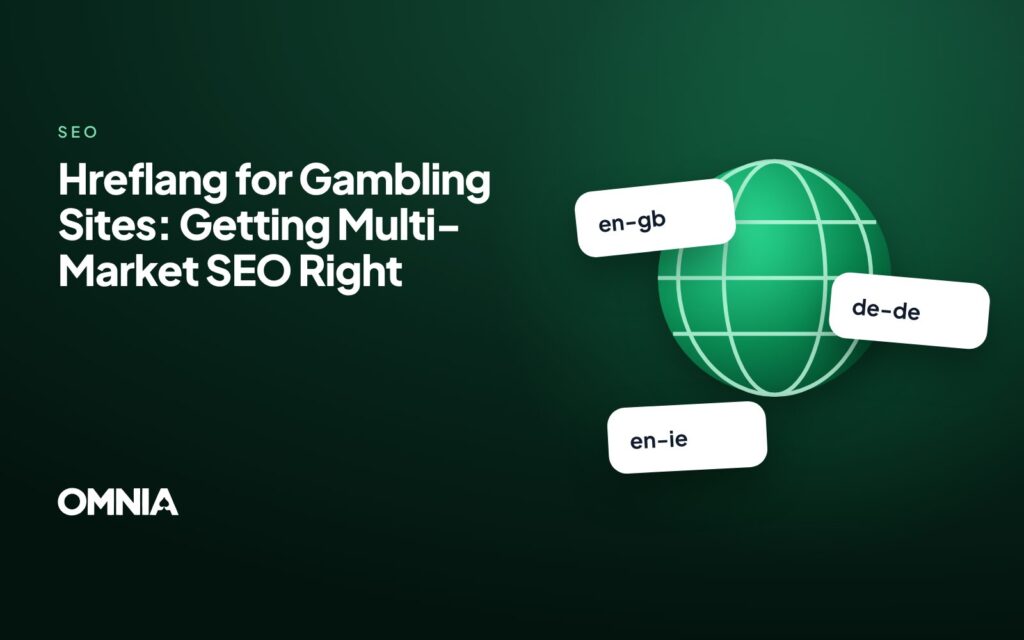
Hreflang is an attribute that tells search engines which language and, optionally, which country a page is meant for, and where the alternative versions of that page can be found. A UK casino page might tell Google that equivalent pages exist for Ireland, Canada and Germany, so Google can show each one to the right audience.
It looks like this in the head of the page:
<link rel="alternate" hreflang="en-gb" href="https://example.com/uk/slots/" /><link rel="alternate" hreflang="en-ie" href="https://example.com/ie/slots/" /><link rel="alternate" hreflang="de-de" href="https://example.com/de/slots/" /><link rel="alternate" hreflang="x-default" href="https://example.com/slots/" />
Why it matters for gambling sites
- Compliance. A player should see the version of your site that is licensed and compliant for their country, with the right offers and terms.
- Duplicate content. English-language versions for the UK, Ireland and Canada can be almost identical. Hreflang tells Google they are deliberate alternatives, not duplicates.
- Conversion. Players who land on the right market version, with the right currency, payment methods and offers, are far more likely to sign up.
The rules hreflang has to follow
- Use the right codes. Language codes come first and country codes second, such as en-gb or de-at. A common mistake is “en-uk”, which is not valid. The correct code for the United Kingdom is “gb”.
- Every page must link back. If the UK page points to the Irish page, the Irish page must point back to the UK page. Missing return links are the most common reason hreflang is ignored.
- Each page should reference itself as well as its alternatives.
- Add an x-default for players who do not match any of your markets, such as a market selector or your main international page.
- Keep canonicals consistent. Each country page should have a canonical tag pointing to itself, not to another market’s version.
- Only point to live, indexable pages. Hreflang links to redirected, blocked or noindexed URLs cause errors.
Where to add hreflang
There are three ways to implement it, and you should choose one:
- In the HTML head of each page. This is the most common option for smaller sites.
- In XML sitemaps. This is often easier to manage on large casino and sportsbook sites with thousands of pages.
- In HTTP headers. This is mainly used for non-HTML files such as PDFs.
Common mistakes on gambling sites
- Market versions that only exist for some pages, leaving hreflang pointing to missing URLs.
- Pages for markets you have exited still listed in hreflang tags.
- Automatic redirects based on a visitor’s location, which can stop Google crawling some versions at all.
- Translated pages that are otherwise identical, without localised offers, payment methods or terms.
- Hreflang added once at launch and never checked again as the site grows.
How to check your setup
Crawl your site with an SEO crawler that reports hreflang errors, check that every return link is in place, and look at which country versions are ranking in each market. If the wrong version keeps appearing, hreflang is the first place to look.
Hreflang is part of every technical SEO audit we run for gambling brands in more than one market. If you are expanding into new countries, find out more about our iGaming SEO services or book a free consultation.